-
Less is More? How Shorter University Degrees Affect Educational and Early-Career Outcomes
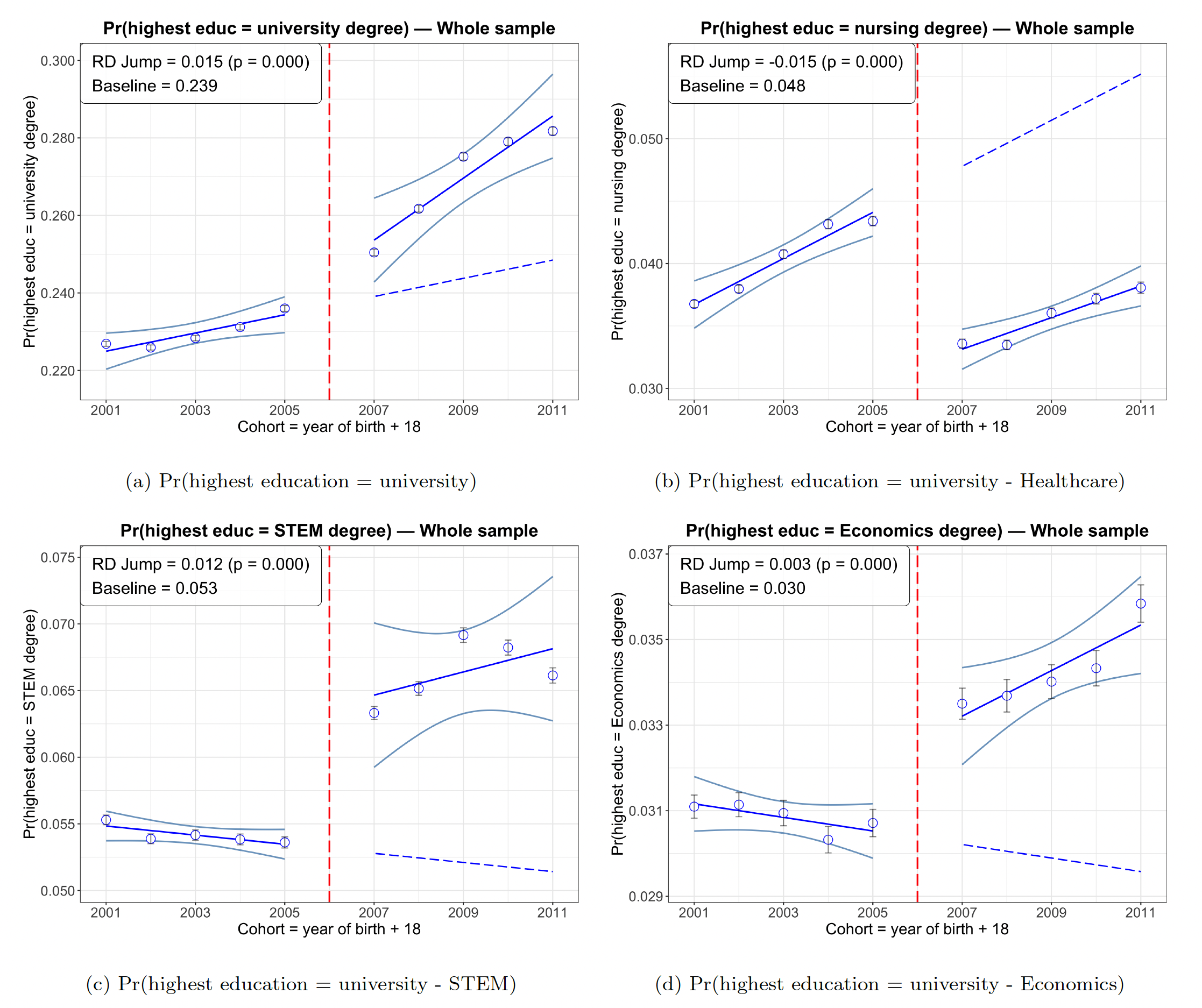
Before the Bologna Process, the Portuguese higher education system comprised of a five-year licenciatura followed by an optional two-year master’s degree. The reform shortened the first cycle to three years, aligning it with the new bachelor’s structure introduced across Europe. Using administrative data, I study the impact this has on university attainment, years of schooling, field of study and occupation choice, and early-career patterns.
-
How do Students React to more Flexible University Systems? The Bologna Process in Italy
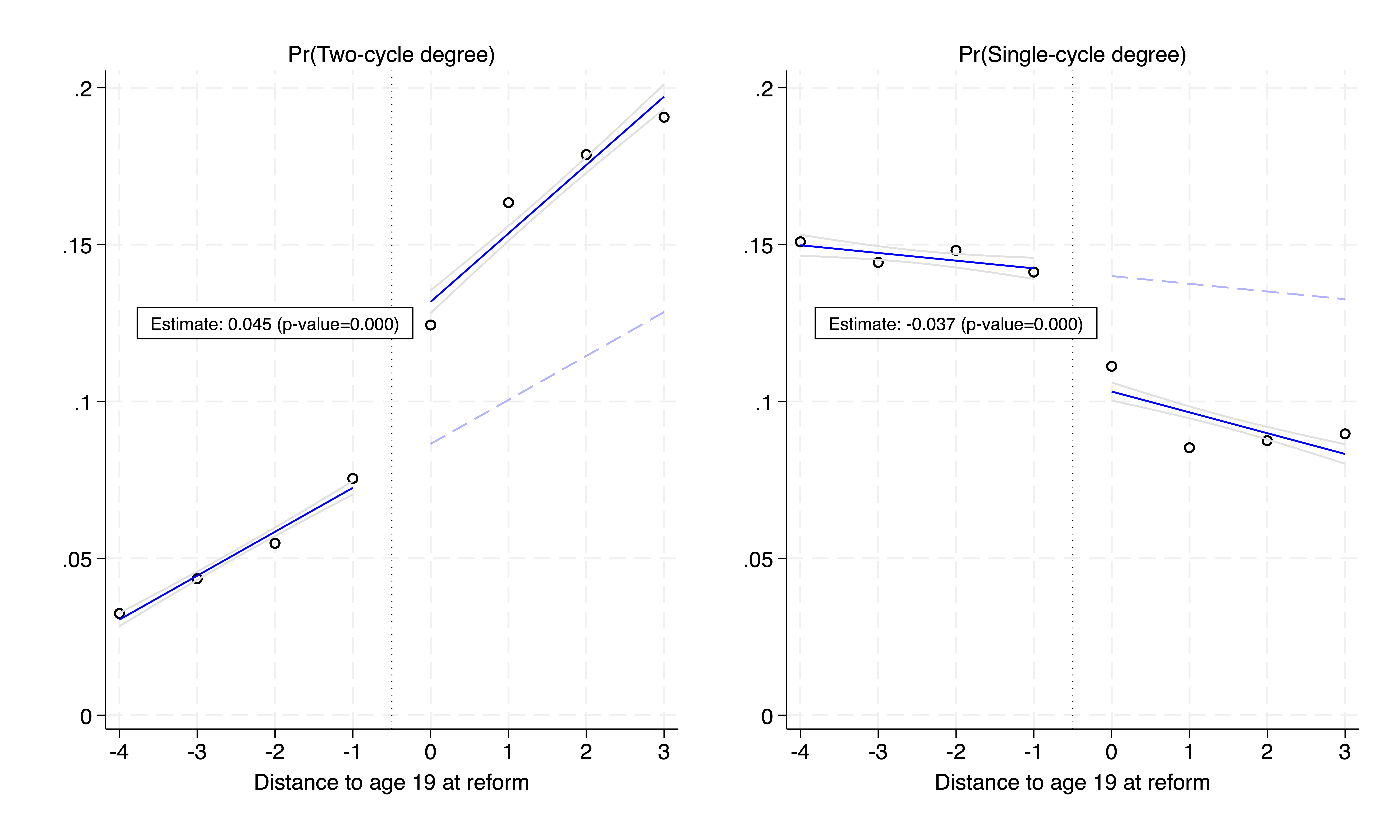
Before the Bologna Process, Italian students faced a single choice regarding higher education. Either enrol in a long university program lasting 4–5 years (single-cycle) or not attend university at all. The reform introduced greater flexibility by restructuring degrees into two cycles—a three-year bachelor’s program followed by an optional two-year master’s degree. I study the impact this has on students' educational choices and wages by the early 30s.
-
Quantifying the Cost of Inaction on Violence against Children and Violence against Women in Italy
Violence against women and children is a major public health problem in Italy, with significant consequences for individual victims and society. We quantify the costs of inaction. Our estimates suggest a lifetime cost of violence of €50,276,903,464.55, equivalent to 2.36% of the Italian GDP in 2024.
-
Unpacking Successful Literacy Interventions. Evidence from Liberia
This paper examines experimentally the impact of a literacy intervention for primary school students in Liberia, and the main mechanisms underlying this impact.